Shirtless Couple
The window frame cuts the scene cleanly — a line drawn between stage and real life. A man and woman stand side by side: skin, ribs, breath. They look outwards, and there is no performance. No heroes pose or theatrical vulnerability in their nakedness. We only see exposure, quiet and unadorned.
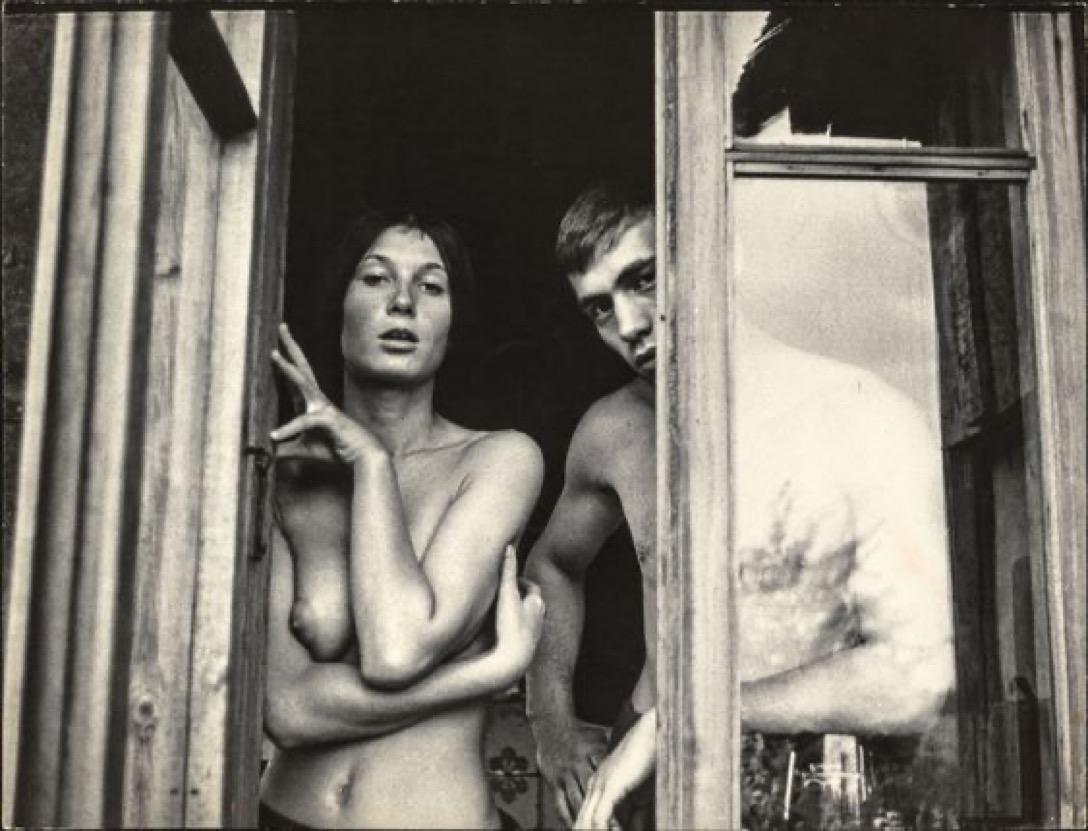
And yet the image refuses to stay neutral.
The moment the eye settles on the woman, something quickly changes. That change is the point. The man’s shirtlessness is ordinary, invisible — the kind of thing we barely register on a hot afternoon or during physical labour. The woman’s identical lack of covering carries a different charge though. It asks a question the man’s body is never made to ask.
John Berger once wrote that men act while women appear — more precisely, that women are trained to watch themselves appearing. This image interrupts the habit. The woman is not embarrassed, apologetic, or conscious of being out of place. She stands with the same ease as the man beside her, which can be unsettling.
Judith Butler’s concept of gender as performance offers a useful lens: what seems natural is often just repetition that has hardened into the appearance of inevitability. The impulse to cover the female body is not deep instinct. It is learned code, social reflex — one that decides which bodies can be unremarkable and those that must be managed, guarded, or explained.
The discomfort, then, belongs to the viewer. The scene itself is calm. It is our inherited expectations that begin to wobble. The man can be shirtless without the world rearranging itself. The woman, occupying the same state without apology, reveals how uneven that permission has always been.


